
Vendor Partner Highlight - Housecall Pro

July 8, 2024

Streamline Your Home Improvement Business with Housecall Pro 

At Third Marble Marketing, we understand the challenges home improvement businesses face. Juggling appointments, managing technicians, and handling invoices can eat up valuable time you could be spending on growing your business. That’s why we’re excited to announce that we now officially recommend Housecall Pro, a powerful field service management software, to our clients. 


What is Housecall Pro? 


Housecall Pro is an all-in-one cloud-based solution designed to streamline your operations and simply your life. It offers a user-friendly mobile app and web portal, packed with the following features that help you: 


  • Schedule and Dispatch Jobs:
    Manage your technicians’ schedules, assign jobs based on location and availability, and provide them with all the information they need to get the job done.

  • Effortless Invoicing and Payments: Create and send invoices, accept payments online, and track customer payment history all from one place.


  • Exceptional Customer Management: Store customer data securely track service history, and automate appointment reminders and follow-up emails to keep your customers informed.

  • Boost Your Marketing: Leverage built-in email and postcard marketing tools, and online review management to reach new customers and build your reputation.
     
  • Data-Driven Decisions: Gain valuable insights with real-time analytics on job performance, revenue, and customer feedback. 


Learn About Housecall Pro Now

The Benefits of Housecall Pro 


Third Marble Marketing recommends Housecall Pro because it offers a variety of benefits for home improvement businesses: 


  • Increased Efficiency:
    Streamline scheduling, dispatching, invoicing, and payments to complete more jobs in less time.

  • Improved Customer Service: Manage customer data effectively track service history, and provide timely updates for a better customer experience.

  • Enhanced Communication: Communicate with technicians and customers in real time to avoid miscommunications and errors.

  • Revenue Growth: Improved efficiency, better customer service, and a larger customer base all lead to one thing—increased revenue!

  • Scalability: Housecall Pro grows with your business. Start with a basic plan and add features as you need them. 


Curious About Housecall Pro Reviews?

  • “There are just so many things that Housecall Pro does for us that a lot of it becomes automatic. It’s a win-win.” - Luke S., Owner, Knight Professional Window Cleaning, Independence, MO 

  • "One of the reasons why I love Housecall Pro is because I don't have to use multiple apps to accomplish the job. The texting with the customer, email confirmations, seeing the schedule—everything is colorized. Every year Housecall Pro is adding more and more things that we're using, from time tracking, GPS tracking, integrating with QuickBooks, to even doing your estimates." - Joe Massa, Owner, Airhawk Heating & Cooling, Odessa, FL


Getting Started with Housecall Pro 


Getting started with Housecall Pro is simple. Sign up for an account on their website and enter your business information, technician details, and service offerings. In just two steps, you’ll be ready to transform your business! 


Third Marble Marketing - Your Partner in Growth 


At Third Marble Marketing, we’re committed to helping home improvement businesses succeed. By recommending Housecall Pro, we provide the tools you need to streamline operations, improve customer service, and grow your business. 

Learn About Housecall Pro Now

Third Marble Marketing - Google Ads & SEO Tips, Tricks and Case Studies
By Ryan Brunt August 31, 2026
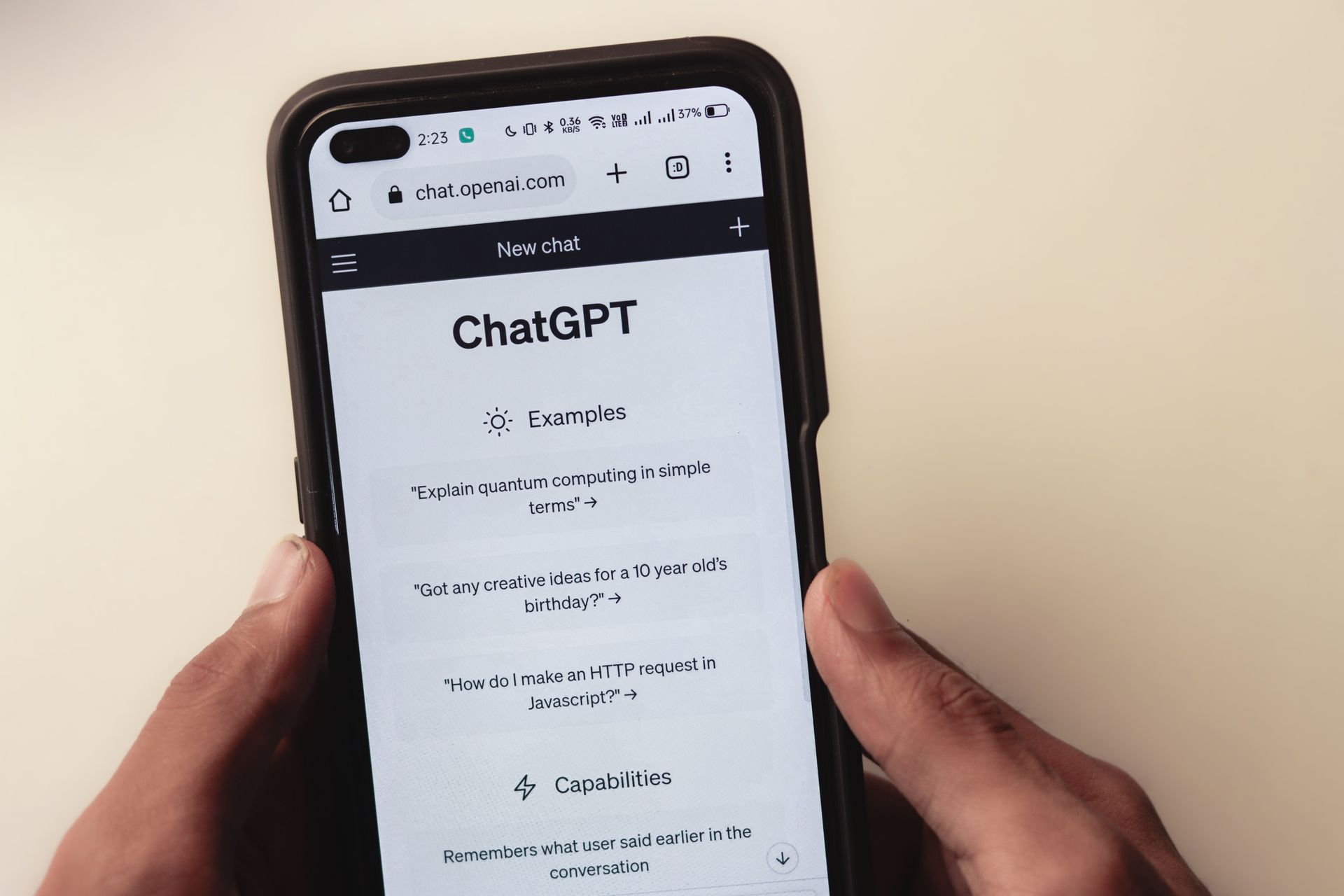
Digital marketing moved past the "ten blue links" model overnight. For years, getting your local service business onto page one of Google was a straight shot: optimize a few pages, build a handful of backlinks, and watch the phone ring. AI engines like ChatGPT, Perplexity, Grok, and Google Gemini changed the rules. They don't just dump a list of website links in front of a user. Instead, they summarize answers, evaluate reputations, and outright recommend specific businesses based on data pulled from across the web. If your digital footprint relies on outdated SEO tactics, AI crawlers will simply skip past you. That raises a critical question: How do you convince an AI engine to recommend your business over the competitor down the street? How Do ChatGPT and Gemini Rank Local Businesses? When a potential customer asks ChatGPT for a reliable local plumber, electrician, or lawyer, the model looks for consistency. It synthesizes your entire digital footprint into a single profile, cross-referencing: Your primary website pages and how clearly they define your services. Your Google Business Profile , including active reviews, business hours, and listed service areas. Third-party directory citations and backlinks that confirm your local reputation. If your site lists one set of services, your Google profile lists another, and your directory citations have outdated addresses, AI engines treat your business as a gamble. And because generative AI avoids recommending unverified sources, inconsistencies mean lost leads. What Is an Entity Map, and How Does It Help AI SEO? As part of our AI SEO Internet Marketing Service , we bridge traditional local search and modern AI optimization using a core framework: the Entity Map . An Entity Map connects your website's key landing pages, target keywords, backlinks, and Google Business Profile into one interlinked ecosystem. Instead of treating your online presence as isolated pieces, the map links everything back to a single central authority—your business. Why Do AI Search Engines Need Structured Entity Signals? When search crawlers and AI models index your brand through an Entity Map, two distinct things happen: Clear Context: The AI gets explicit, verified data on exactly what services you offer, where you operate, and who you serve. This prevents algorithms from guessing or hallucinating details about your business. Amplified Authority: Concentrating your backlinks, schema data, and service listings into a unified entity signals high trust to both traditional Google algorithms and modern AI answer engines. How Can You Prepare Your Business for AI Search? AI optimization isn't about replacing traditional SEO; it's about structuring your data so modern algorithms can actually parse and trust it. By establishing a verified web of interlinked entity signals, your local business stays visible whether a customer uses standard Google search or asks an AI assistant for a personal recommendation. Want to see how your current online presence measures up for AI search? Explore our AIO Processes Page to learn how we structure your business for long-term visibility.
SEO  improvement: person using a laptop on grass, viewing a photo of oranges on the screen
By Alex Huibsch August 20, 2026
If you are a small business owner trying to climb Google’s search results, you have likely heard a variety of SEO "hacks" over the years. Lately, our team has had several business owners ask us a very specific question: "Should I swap out the photos on my website every couple of weeks to give my SEO a boost?" Our short answer? No, not just for the sake of changing them. Simply rotating images on your site does not improve your rankings, nor does it trick Google into thinking your website is suddenly more "fresh." However, images do play a vital role in both traditional search engines and modern AI Search Optimization (AIO, GEO, AEO, etc.). This is the practice of optimizing content so generative search engines understand and cite your brand. To clear up the confusion, we have answered the most common questions about website photos, search algorithms, and what actually moves the needle for your business online. The Big SEO Myth: Photo Swapping vs. Real Freshness FAQ 1: Does Google reward websites that frequently change their images? No, Google does not reward change simply for the sake of change. Replacing one photo with another similar photo every few weeks does not signal to Google that your page is more authoritative or relevant. Google evaluates whether your page satisfies a user's search intent. The text, structural hierarchy, entity clarity, and overall usefulness of the page carry far more weight than cosmetic image swaps. FAQ 2: Doesn't Google love "fresh" content? Google does have freshness algorithms (often referred to as Query Deserves Freshness, or QDF), but freshness only matters for certain types of content. Google prioritizes fresh content for the following: Breaking news and current events Rapidly changing industries (like tech or finance) Time-sensitive topics or recurring events For the vast majority of local business service pages (e.g., plumbing, HVAC, legal services, kitchen remodeling, etc.), "freshness" is not a primary ranking factor. A well-written, highly relevant service page, on the other hand, will outperform a page that receives constant minor image updates every single time. How Images Actually Drive SEO and AI Search Optimization (AIO) While swapping images randomly will not help your rankings, updating and optimizing your images strategically definitely can. Modern AI engines use multimodal vision models alongside text crawlers to evaluate page authenticity, visual relevance, and entity trust. FAQ 3: When should you change or update the photos on your website? You should update your photos when the new images genuinely improve the page experience for your human visitors. Updates help your SEO and AI visibility indirectly when: You replace stock photos with original photos: Real photos of your team, work, and equipment build immediate trust and help AI models verify your business as a legitimate local entity. The new images better match the text: If your written content changes, your visual content should shift to reinforce it. You replace low-resolution files: High-quality visuals keep users on your page longer, reducing bounce rates and signaling strong engagement to search engines. FAQ 4: How do you ensure website photos support your SEO story? Your images must reinforce the specific topic of the page they sit on. Service Pages: If your page is about kitchen remodeling, show completed local kitchens (not your company’s annual chili cook-off). Team Pages: Show your current staff. Avoid generic stock photos of people who don't work at your company, or outdated photos from five years ago. Project Galleries: Use real photos of specific local jobs to reinforce your service area and real-world expertise. FAQ 5: What is the technical checklist for optimizing website images? When uploading new images, ensure you optimize them for search crawlers, AI multimodal processing, and site speed:
By Ryan Brunt August 20, 2026
If you want your brand cited by AI engines like ChatGPT, Gemini, Grok, and Perplexity, standard keyword optimization isn't enough. Generative Engine Optimization (GEO) requires structuring your site so Large Language Models (LLMs) can easily parse, verify, and cite your text as a primary source. Why AI Engines Require a New Approach to SEO AI search engines don't simply scan web pages for keyword density. They process text semantically, evaluating context, trust signals, and structured data to synthesize direct answers for users. Technical SEO gets you crawled, but GEO gets you cited. Here’s how to structure and write your website content for maximum AI visibility: 1. Establish Topic Authority with Citation-Worthy Data AI search engines favor content they can confidently reference to answer user queries. Broad advice gets ignored; definitive, well-structured facts get cited. Publish Original Insights: Include original statistics, proprietary research, or clear case studies. LLMs prioritize unique data points when generating answers. Demonstrate Clear E-E-A-T: Explicitly attribute content to verifiable industry experts, link to authoritative third-party sources, and clearly state your real-world experience. Use Direct Definitions: Use crisp, "is-a" definitions (e.g., "AI SEO is the practice of..." ) so LLMs can scrape yo ur site for conversational definitions. 2. Structure Content with Intent-Based Q&A Formatting LLMs process text sequentially and conversationally, much like a human reader. Aligning your layout with natural language search patterns drastically improves your extraction rate. Use Direct Question Headings: Format your H2 and H3 headers as specific user queries (e.g., "How do AI search engines rank websites?" ). Lead with "Bottom Line Up Front" (BLUF): Answer the header's question in the very first sentence (20–30 words). Follow up with detailed context, bullet points, or tables below. Implement FAQ Schema: Wrap your Q&A sections in FAQPage structured d ata to help search crawlers instantly map your answers. 3. Format Content for LLM Scraping Dense, unstructured paragraphs confuse AI parsers. Visual formatting for humans doubles as structural data for AI models.
By Alex Huibsch August 11, 2026
If you’re a business owner and your website doesn’t have a properly installed Consent Management Platform (also called a cookie banner or CMP), your Google Ads will undoubtedly begin to suffer. This has become even more prevalent in the last few months in the wake of new changes to privacy laws. In response to this, the Third Marble team built a proprietary “Data Chain Process” to solve this exact problem. Here’s how we used it to turn things around for a national home fixture retailer, taking their ROAS (return on ad spend) up by 263% and boosting total leads by a whopping 605%.
By Alex Huibsch July 31, 2026
Why Do You Need a Consent Management Platform ASAP? Privacy mandates are expanding: State-level statutes across the U.S. (including Virginia's VCDPA and California's CPRA ) legally require websites to offer explicit tracking choices to visitors. Google is enforcing Consent Mode v2: If you track leads, sales, or site traffic without a Google-certified CMP, your campaign targeting, remarketing audiences, and conversion tracking will degrade. Setup order determines success: A cookie consent banner alone is not enough. If the backend code sequence is incorrect, Google will not receive consent signals even if the banner displays properly on your site. If you manage a business website, you have likely seen cookie consent banners asking visitors to "Accept All" or "Manage Settings." It’s easy to look at those banners and assume they’re just corporate legal formalities for Fortune 500 companies. A few years ago, that line of thinking might have held up. However, today it’s a completely different story. If your website uses Google Ads or Google Analytics to drive leads and sales, having a functional Consent Management Platform (CMP) is essential infrastructure. Here’s a straightforward breakdown of why a CMP matters for your marketing performance and how to verify yours actually works. Why is a CMP Mandatory for Modern Advertisers? There are two main drivers behind this shift: growing legal requirements and Google’s strict platform policies. 1. Expanding State and Global Privacy Laws Privacy legislation across the United States (including laws in Virginia (VCDPA), California (CPRA), Colorado (CPA), and Texas (TDPSA)) requires websites to give users explicit control over how their data is tracked. If your site uses analytics scripts or advertising pixels, you are legally expected to offer clear opt-in options. 2. Google Ads Consent Mode v2 Enforcement Google updated its advertising system to strictly require Consent Mode v2 . If you track conversions or build audiences without an approved, Google-certified CMP signaling user consent, your advertising account suffers: Smart Bidding algorithms go blind: Google Ads uses machine learning to find high-value leads. Without consented audience signals, the platform ignores visibility into who converts, making your ad spend far less efficient. Remarketing lists freeze: You can no longer build retargeting audiences for visitors who left your site without taking action. Conversion reporting drops: Your performance dashboard will show fewer tracked conversions, making it difficult to evaluate which keywords yield a return on investment. The bottom line: Running ads without a CMP leads to inaccurate tracking, reduced conversions, and wasted ad spend. Why is a "Working" Banner Not Enough? During website audits, we frequently see business owners fall into a common setup trap. In fact, our team finds that over half of the consent banners we inspect are purely cosmetic because they display a banner to human visitors, but pass zero backend consent signals to Google's ad servers. Because of situations like this, our go-to CMP recommendation for small and mid-sized businesses is Termly . It’s clean, reliable, affordable, and approved by Google as a Gold-Tier CMP partner. However, having a proper setup is key. We find that many business owners purchase a Termly subscription, add the code to their site, see the banner pop up, and assume the job is done. Remember: A consent banner can look functional to a visitor on the front end while failing to transmit consent signals to Google on the back end! The 5-Step Order of Operations for Proper Setup To properly hold back cookies until a user consents and pass those signals to Google Ads, your site code must follow a strict order of operations: Deploy conversion tracking tags first: Google Tag Manager (GTM), GA4, or Google Ads tags must exist on the site first so the CMP knows which scripts to manage. Place CMP code at the very top of the on all pages: The Termly script must sit above all other tracking scripts in your website header code. If a tracking script fires before the CMP loads, the consent state fails. Run a full site cookie crawl: The CMP must scan your site after your Google tags are active. Skipping this step prevents Termly from recognizing and controlling your cookies. Enable v2 Advanced Consent Mode: Toggle Advanced Consent Mode inside your CMP settings. Unlike Basic mode (which completely blocks tags), Advanced mode sends privacy-safe "cookieless pings" to Google, allowing its AI to model missing conversion data when users decline cookies. Clear site cache and test backend signals: Clear your website cache and verify the installation using Google Tag Assistant. Look specifically for backend parameters like gcs (Google Consent State, such as G111 for granted) and gcd (Google Consent Default) to confirm consent choices are reaching Google. Protect Your Setup and Keep Your Google Ads Running Setting up a CMP is not about putting an annoying cookie banner on your homepage. On the contrary, it’s about protecting your monthly marketing budget, avoiding legal trouble, preserving accurate ROI reporting, and staying competitive in search results. If you’re unsure about whether your website is passing valid consent signals, you don’t have to figure out complex script orders alone! What are Third Marble Marketing’s CMP Setup Options? Our team offers simple, dedicated setup options: We Do It With You: A 30-minute screen-share session ($49) where we walk you through setting up or fixing your Termly installation. We Do It For You: A complete, turnkey CMP setup ($149 set-up fee plus $29/month) where we install Termly, configure v2 Advanced Consent Mode, generate legally compliant Privacy and Cookie Policy pages, and test all signals end-to-end. If you’d like help with CMP or have questions about our award-winning Internet Marketing Service , schedule a call with our experts today! We can help you audit your tracking, fix broken consent signals, and keep your campaigns performing at their best!
By Alex Huibsch June 22, 2026
Let’s be completely honest. For a small business, local SEO isn't just a marketing line item. It’s how you keep the lights on. When someone down the street pulls out their phone and searches for exactly what you sell, you either show up in that Google Maps "Local 3-Pack" or you basically don't exist to them. The trouble is, finding a marketing partner can feel like walking through a minefield. The industry is saturated with agencies charging corporate-level retainers that burn through your budget before you see a single inbound lead. To save you the headache and the wasted cash, we’ve vetted the top 10 local SEO agencies that actually specialize in the scrappy, high-ROI strategies small businesses need to dominate their neck of the woods. We have also included a quick data snapshot below to give you a baseline comparison before diving into the deep reviews. At-a-Glance: Top Agency Baseline Comparison
By Alex Huibsch June 18, 2026
How Can Third Marble Marketing's Premier Package Break Through an SEO Performance Plateau and Double Organic Traffic?
By Alex Huibsch April 20, 2026
What are the Requirements for AI Search Visibility (GEO)? To rank in AI-generated search results, a website requires three core components: high-authority backlinks (Domain Authority 30+), question-based content that provides a direct answer within the first 50 words, and technical schema markup that defines the site’s "entity" to search bots. Core Requirements for AI Visibility AI models prioritize data that is easy to categorize. To win the "Featured Snippet" or be the cited source in an AI answer, your site must provide: High-DA Backlinks: These establish the "Trust Factor." AI models use these links as a digital vouch to ensure your information is accurate. Question & Answer-Style Content: This provides the literal text the AI pulls for its response. This content must be clear, objective, and placed at the top of the page. Technical Schema Markup: This is the "map" for bots. It tells the AI exactly who you are, what services you provide, and your physical service area. Optimized Site Speed: AI crawlers prioritize sites that load quickly and are easy to index without technical errors. Why is "Traditional" SEO No Longer Enough? Old SEO was built for keywords, while AI SEO (also known as Generative Engine Optimization) is built for intent. What's the Real Cost of Content and Authority? The transition from our Basic to our Enhanced and Premium packages is driven by the specific "fuel" required for AI results. AI search models are sophisticated enough to ignore "fluff." To rank, you need: Expert-Level Writing: Our higher tiers cover the cost of professional writers who create 1,000+ word "Definitive Guides" that AI models prefer to quote. Premium Link Acquisition: Moving into the Enhanced or Premium tiers allows us to secure backlinks from higher-authority domains. These links are more expensive to acquire but are the only way to build the level of "trust" AI requires. Comparing Third Marble SEO/AI Packages We’ve structured our packages to scale with the level of AI competition in your industry: Basic SEO Package ($499/mo) AI Visibility: Minimal. Focus: Fundamental on-page SEO and low-authority backlinks. Best For: Low-competition niches where AI search isn't yet dominant. Enhanced SEO/AI Package ($1,299/mo) AI Visibility: Medium. Focus: Quarterly professional content development and medium-authority backlinks. Best For: Moderate competition (20-100 competitors) looking to start appearing in AI answers. Premium SEO/AI Package ($3,499/mo) AI Visibility: High. Focus: Monthly professional content, high-authority backlink mix, and monthly expert strategy sessions. Best For: High-stakes industries (50+ competitors) where being the "Top AI Result" is a primary business goal. Frequently Asked Questions about AI Search Why did the price of SEO increase for AI? The "fuel" for AI visibility (high-quality content and high-authority links) is significantly more expensive to produce and acquire than the keyword-stuffing techniques of the past. What are the main factors in pricing for the AI-focused packages? Pricing is primarily driven by the inclusion of professional content writing and the premium cost of securing backlinks on high-authority websites. These two factors ensure higher quality and better search visibility for the Enhanced and Premium tiers. How long does it take to show up in AI results? Most businesses see a shift in AI citations within 3 to 6 months of implementing technical schema and high-authority content. Does Google Ads help with AI results? While Ads don't change your organic AI ranking, they provide immediate visibility while your long-term AI authority is being established. Ready to Secure Your AI Ranking? AI search is shifting from "maybe one day" to "right now." If your website isn't providing the direct answers and high-authority signals these models require, your competitors will be the ones getting the citations. Don't leave your digital visibility to chance. Our team is ready to audit your current AI footprint and build a strategy that puts your business at the top of the results. Schedule a call with us today!
By Alex Huibsch April 17, 2026
Why do your Google Ads Costs Increase When you don’t Track Valuable Conversions? Google Ads charges a higher Cost-Per-Click (CPC) to accounts without conversion tracking because the algorithm views them as low-quality destinations. Without conversion signals, your Quality Score drops, triggering an "Invisible Tax" where you pay up to 40-80% more than competitors for the same keyword traffic. What are the Core Requirements for Reducing CPC via Tracking? To avoid the "Invisible Tax" and optimize for AI-driven bidding, your account must meet these technical and strategic benchmarks: Conversion Signal Integration: You must deploy GTAG.js or Google Tag Manager (GTM) to track high-intent actions such as phone calls, form fills, and live chats. Quality Score Optimization: Google uses a scale of 1-10 to determine your ad rank. Accounts with verified conversions see higher Landing Page Experience scores, which lowers the required bid to reach the top of the page. Smart Bidding Activation: Accessing automated strategies like Target CPA (Cost-Per-Acquisition) or Maximize Conversions requires a minimum of 15-30 conversions over 30 days to provide the AI with sufficient data. Negative Keyword Scrubbing: Without tracking, businesses often waste $500+ per month on "vanity keywords" that drive clicks but zero revenue. Tracking allows for the immediate pruning of these non-performing assets. Schema Markup: Implementing Organization and LocalBusiness Schema helps Google’s crawlers verify the legitimacy of your "destination," further boosting your authority.
By Alex Huibsch March 17, 2026
Prior to June, a retailer specializing in medical and firefighter equipment found their Google Ads performance had plateaued. The account's click-through rate (CTR) rarely moved above 1%, and monthly sales were trapped under a "glass ceiling". While they typically secured between 50 and 100 conversions each month, they were unable to consistently break into triple-digit territory. The Fix: Our team realized the "plumbing" was the real problem. In December, we did a deep dive to fix nagging issues with their conversion tracking and Google Merchant Center (GMC). Once those technical hurdles were cleared, we shifted the entire account over to Performance Max (PMAX). Further, we focused heavily on the “Firefighter Supplies” PMAX campaign and specifically targeted high-traffic states like California and New York. The Results: The turnaround was fast. By January 2026, the account's CTR jumped to 1.05%, which is a 42% improvement over the same time last year. More importantly, that 100-sale ceiling is gone. As a result, the company has been averaging 150 purchases a month for the last two months.