
Myth Busted: Does Changing Website Photos Improve Your SEO Rankings?
If you are a small business owner trying to climb Google’s search results, you have likely heard a variety of SEO "hacks" over the years. Lately, our team has had several business owners ask us a very specific question:
"Should I swap out the photos on my website every couple of weeks to give my SEO a boost?"
Our short answer? No, not just for the sake of changing them.
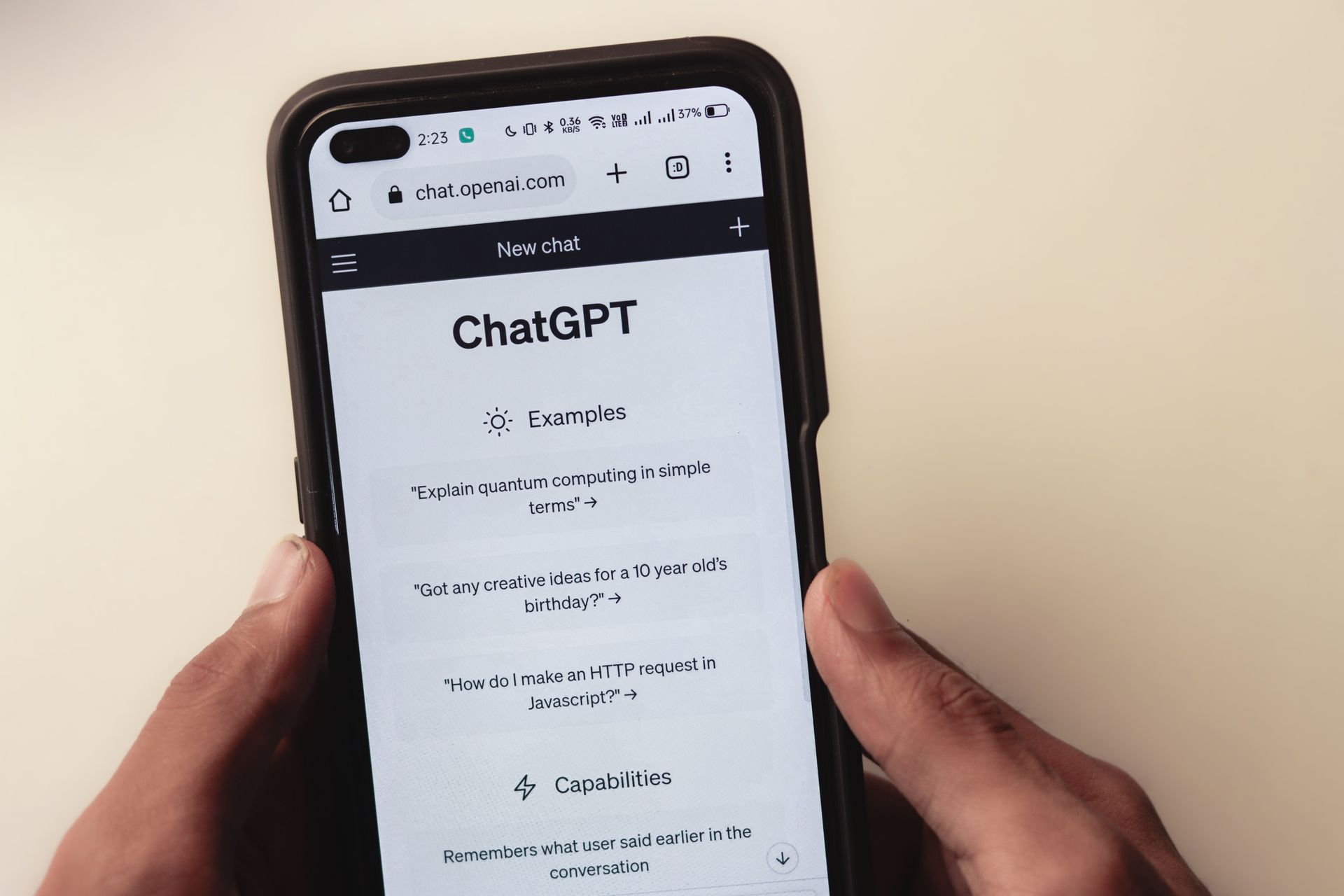
Simply rotating images on your site does not improve your rankings, nor does it trick Google into thinking your website is suddenly more "fresh." However, images do play a vital role in both traditional search engines and modern AI Search Optimization (AIO, GEO, AEO, etc.). This is the practice of optimizing content so generative search engines understand and cite your brand.
To clear up the confusion, we have answered the most common questions about website photos, search algorithms, and what actually moves the needle for your business online.
The Big SEO Myth: Photo Swapping vs. Real Freshness
FAQ 1: Does Google reward websites that frequently change their images?
No, Google does not reward change simply for the sake of change. Replacing one photo with another similar photo every few weeks does not signal to Google that your page is more authoritative or relevant.
Google evaluates whether your page satisfies a user's search intent. The text, structural hierarchy, entity clarity, and overall usefulness of the page carry far more weight than cosmetic image swaps.
FAQ 2: Doesn't Google love "fresh" content?
Google
does have freshness algorithms (often referred to as Query Deserves Freshness, or QDF), but
freshness only matters for certain types of content.
Google prioritizes fresh content for the following:
- Breaking news and current events
- Rapidly changing industries (like tech or finance)
- Time-sensitive topics or recurring events
For the vast majority of local business service pages (e.g., plumbing, HVAC, legal services, kitchen remodeling, etc.), "freshness" is not a primary ranking factor. A well-written, highly relevant service page, on the other hand, will outperform a page that receives constant minor image updates every single time.
How Images Actually Drive SEO and AI Search Optimization (AIO)
While swapping images randomly will not help your rankings,
updating and optimizing your images strategically definitely can. Modern AI engines use multimodal vision models alongside text crawlers to evaluate page authenticity, visual relevance, and entity trust.
FAQ 3: When should you change or update the photos on your website?
You should update your photos when the new images genuinely improve the page experience for your human visitors. Updates help your SEO and AI visibility indirectly when:
- You replace stock photos with original photos: Real photos of your team, work, and equipment build immediate trust and help AI models verify your business as a legitimate local entity.
- The new images better match the text: If your written content changes, your visual content should shift to reinforce it.
- You replace low-resolution files: High-quality visuals keep users on your page longer, reducing bounce rates and signaling strong engagement to search engines.
FAQ 4: How do you ensure website photos support your SEO story?
Your images must reinforce the specific topic of the page they sit on.
- Service Pages: If your page is about kitchen remodeling, show completed local kitchens (not your company’s annual chili cook-off).
- Team Pages: Show your current staff. Avoid generic stock photos of people who don't work at your company, or outdated photos from five years ago.
- Project Galleries: Use real photos of specific local jobs to reinforce your service area and real-world expertise.
FAQ 5: What is the technical checklist for optimizing website images?
When uploading new images, ensure you optimize them for search crawlers, AI multimodal processing, and site speed:
| Optimization Step | Bad Example | Good/Optimized Example |
|---|---|---|
| Filename | IMG_4827.jpg | custom-kitchen-remodel-richmond-va.jpg |
| Alt Text | "photo1" | "Kitchen Remodeler Richmond VA: Modern white custom kitchen remodel in Richmond VA" |
| Format | Uncompressed .PNG or .TIFF | Next-gen format like .WebP |
| File Size | 4 MB+ (slows page speed) | Under 200 KB (compressed for fast loading) |
High-Impact SEO Strategies to Focus On Instead of Image Swapping
If your goal is higher search rankings, stronger AI visibility, and more leads, routine photo swapping is a poor use of your valuable time.
FAQ 6: What SEO tasks offer a better return on investment than changing photos?
Instead of making cosmetic updates, focus your effort on high-impact strategies:
- Expand Service Page Content: Add detailed, helpful, and unique text that answers specific customer questions.
- Publish Case Studies & Job Spotlights: Show real-world examples of your work with context, location details, and customer outcomes.
- Keep Information Up-to-Date: Update pricing, service offerings, and outdated business policies.
- Optimize Your Google Business Profile (GBP): Keep your business hours, services, and primary categories accurate, and regularly upload real work photos there (where location signals carry heavy weight).
- Gather Authentic Google Reviews: Consistently ask satisfied customers to leave feedback.
- Improve Page Speed & Mobile UX: Ensure your site loads instantly on mobile devices.
- Strengthen Internal Links: Connect related service pages and blog posts logically to pass authority throughout your site.
The Golden Rule of Website Photos for Small Businesses
As Lizzie Morrow, Director of Education & Events at Third Marble Marketing, often reminds small business owners:
"My rule of thumb: Don't ask, 'How often should I change my website photos?' Instead, ask yourself, 'Do these photos help my website visitors trust my business and understand what I do?' If the answer is yes, leave them. If you have newer, higher-quality, or more relevant photos, update them—not because Google likes to change, but because your customers will."
If you focus on clarity, trust, and real value for your human visitors, the search engines and AI models will naturally follow.
Third Marble Marketing - Google Ads & SEO Tips, Tricks and Case Studies
,
, bullet points, pricing tables, etc.) are effortless for LLMs to scan. 3. Human Verification & Real Expertise To prevent misinformation or generic advice, our team interviews clients directly. Every tip, process step, or service description we publish is verified by an actual business owner to satisfy Google's E-E-A-T standards. 4. Multi-Platform Monitoring Rankings aren't just measured on Google anymore. We track your footprint using Google Search Console alongside tools that monitor how your brand appears across ChatGPT, Gemini, Grok, and Perplexity. Is Traditional SEO Dead? No, traditional SEO is alive and well. In fact, AI search engines rely almost entirely on Google's core ranking systems (domain authority, site speed, and technical health) to choose which businesses to trust and quote. If your website isn't technically sound or properly indexed, AI engines won't find or quote it. Our AI Optimization builds directly on top of traditional SEO to ensure you capture both standard search traffic and modern AI recommendations. Ready to Claim Your Share of AI Search? Search is changing fast, but getting your business in front of local customers doesn't have to be complicated or overpriced. At Third Marble Marketing, we back our process-driven AI SEO with flat-rate pricing and no long-term contracts. Schedule a quick call with our team to pick the right plan for your market.